
Third-party logistics (3PL) helps e-commerce businesses reduce shipping costs while improving delivery speeds and efficiency. By outsourcing shipping to third-party services, you don’t have to spend significant money to set up your own shipping infrastructure, and you’ll have more time to focus on marketing and scaling your store.
If you’re wondering how third-party fulfillment works and which third-party logistics providers to choose from, you’ve arrived at the right place. Here’s a detailed guide to 3PL e-commerce fulfillment, its benefits, and how to select the best providers for your online store.
What is third-party fulfillment?
Third-party fulfillment entails outsourcing logistics to external providers. These third-party services will handle logistics processes, including storing and shipping orders to customers, on your behalf. It’s a convenient arrangement that eliminates the headaches involved with running logistics operations in-house. It also frees more time and labour to dedicate to marketing and customer service.
Fulfillment centers explained
Third-party logistics (3PL) companies operate “centers,” which are warehouse locations from which they store, sort, package, and ship orders on behalf of e-commerce businesses. These centers employ skilled inventory managers and use specialized equipment and software to make their processes highly efficient.
Some 3PL fulfillment companies operate centers worldwide, while others focus on specific locations. The idea is to choose one that operates third-party fulfillment centers close to your customer base, as this proximity helps ensure quick delivery.
How does third-party fulfillment work?
You can choose a suitable third-party fulfillment provider for your e-commerce business. The 3rd-party fulfillment provider will store goods on your behalf. When a customer orders an item from your store, the provider then picks the relevant item and ships it to the customer’s address, for a fee. The fee varies depending on the customer’s location and the type of product being shipped.
Partnering with 3PL fulfillment companies guarantees reliable shipping to your customers, especially when running a small or mid-sized business with limited funds for in-house shipping operations.
The roles of a 3PL company
The key roles of 3PL fulfillment companies include:

- Order management. When customers place orders on your store, 3PL companies receive the orders, pick the required products from your inventory, and ship them to customers. They also monitor your inventory and alert you to restock when needed.
- Storage. 3rd-party fulfillment companies can store your goods in their warehouses long-term, before shipping them out to customers. For example, you can store goods weeks or months ahead of a product launch. This storage ensures a steady supply of products to fulfill orders after launching.
- Packaging. Some 3PL e-commerce fulfillment companies offer custom packaging services to enhance customer experience and make your products stand out.
- Shipping. 3PL e-commerce fulfillment companies ship goods to customers and ensure each one receives their order at the appropriate time.
Benefits of using third-party fulfillment services
Faster and more affordable shipping
Third-party fulfillment providers have robust infrastructure and expertise to facilitate global shipping. By tapping into this infrastructure and expertise, you can ship goods more affordably and faster compared to handling shipments yourself.
Accurate inventory management
Third-party fulfillment services track inventory for your store and immediately alert you when a product is running low and needs replacement. You can view a real-time count of your inventory and avoid making errors that’ll disappoint customers.
Access to technology and tools
3PL e-commerce fulfillment services provide software tools that help you run an efficient business. For example, software integrations enable every customer’s order to be automatically sent to the third-party fulfillment provider for processing, instead of processing each order manually.
Scalability for growing businesses
By partnering with a third-party provider, you can easily scale your logistics operations when needed, at much lower costs compared to running in-house logistics operations.
Third-party providers already have the right infrastructure in place, so they can quickly redirect resources to serve your increasing needs. You can start as a small retailer and grow into a large one without sacrificing delivery speed and customer satisfaction.
Better customer experience
With improved efficiency from working with 3PL e-commerce fulfillment services, you’ll gain the ultimate benefit of improved customer satisfaction. Customers who receive their items quickly become happy and more likely to be repeat buyers.
Third-party fulfillment vs. Other fulfillment methods
Let’s explore how a 3rd-party fulfillment solution compares with other options:
Self-fulfillment
Self-fulfillment entails storing, sorting, and shipping goods by yourself. You can rent a physical warehouse to store goods, then ship them out via delivery couriers when a customer places an order.
Self-fulfillment gives you more control over shipping than relying on third parties, but it requires significant upfront investment and maintenance costs that aren’t feasible for small to mid-sized online retailers. This model works best for large companies that can afford the high upfront costs.
Dropshipping
Dropshipping is similar to third-party fulfillment, where an external company takes care of packing and shipping orders. The difference is that in third-party fulfillment, you may own the inventory managed by the third-party logistics company, but in dropshipping, you don’t own the inventory.
Dropshippers rely on third parties for everything from inventory to shipping. With a reliable dropshipping platform, such as Zendrop, you can run an online store without much hassle.
Hybrid models
The hybrid approach involves running both third-party and in-house logistics operations. For example, you can use third-party logistics for foreign deliveries and handle domestic deliveries in-house.
The hybrid model lets you enjoy the benefits of both third-party and in-house logistics. You’ll gain the convenience of outsourcing some operations to third parties and also exercise greater control over parts of the logistics operations you run in-house.
The 3PL fulfillment process
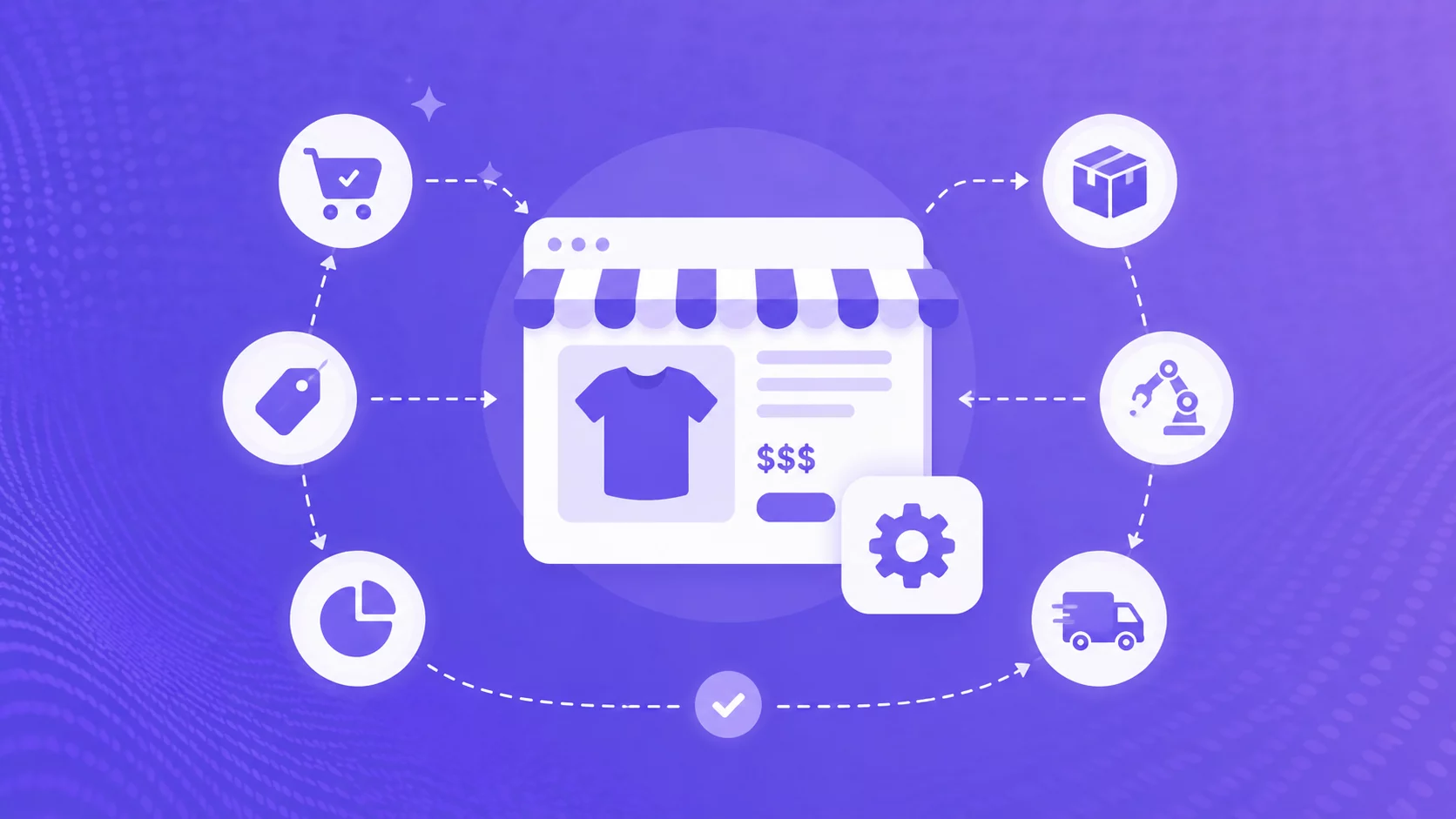
A 3rd-party fulfillment solution usually follows this model:

Receiving inventory
It begins with sending your goods to the third-party logistics provider. Every item will be logged into the provider’s inventory management software for future reference. You can have a real-time view of your inventory via this software.
Storage and inventory management
The third-party provider keeps your inventory in a designated location and conducts regular checks to ensure things are in order.
Picking and packing orders
When a customer places an order, the third-party provider receives the order and then checks the inventory to pick the ordered item. The order is then packed and logged for shipment.
Shipping and delivery
The logistics provider ships the packaged order to the customer’s address. 3PL providers usually partner with courier companies, such as DHL and FedEx. Depending on the customer’s location, they’ll pick the courier that can send it in the shortest possible time.
You’ll be notified when an order has been shipped and when the customer receives the order. Similarly, the customer can track their order in real-time from the courier’s system.
Returns and reverse logistics
A customer may choose to return an item because it’s damaged or doesn’t meet their expectations. In that case, the 3PL provider will receive the returned item and send a replacement to the customer. Otherwise, you may be asked to process a refund for the customer.
Product returns, also called reverse logistics, are inevitable when running an online store. Hence, you’ll need a third-party fulfillment service that can handle returns reliably. 3PL services charge a fee to process returns, which varies depending on the customer’s location and the item’s value.
How to choose the right 3PL fulfillment company
To choose the best 3PL service for your e-commerce business, consider these factors:
Experience and reputation
The best 3PL services have built stellar reputations over time, with positive reviews from e-commerce businesses that have worked with them. Before choosing a 3PL provider, research these reviews to see what other e-commerce entrepreneurs say about them. Consider how long they’ve operated for and which businesses they have previously worked with.
If you observe overwhelmingly positive reviews about a 3PL provider, it signals that it’s a reliable partner for your e-commerce business. Otherwise, negative reviews warrant more scrutiny and signal the need for an alternative.
Location and distribution network
A third-party logistics provider’s location and distribution network determine its delivery speed and effectiveness. You should seek a provider that has fulfillment centers close to your customer base, preferably in the same country.
If your business has global customers, the best choice is a 3PL provider that operates fulfillment centers worldwide. In contrast, if your customers are located in a specific country or city, a 3PL provider with only a domestic fulfillment center will suffice.
Services offered
Third-party fulfillment services offer more than just logistics. For instance, some provide custom packaging services and tools that help you find the best products to add to your catalog.
You can find 3PL providers offering services that suit your business needs. For example, if you run a personal care brand, custom packaging will be a good service to have, as it’ll help you stand out in an intensely competitive niche.
Pricing and cost transparency
The best 3PL providers have transparent fees regarding shipping, returns, and subscriptions to access certain features.
Shipping fees vary depending on the size, type, and customer’s location, so you’ll need a price guide to estimate the cost of shipping beforehand. You also should know enough to estimate the cost of processing returns, plus any other service your company will charge. Providers with opaque, hidden fees should be avoided.
Technology and integrations
The best 3PL providers have integrations with popular e-commerce platforms like Shopify and BigCommerce. These integrations enable you to sync your store’s backend with the third-party provider’s system. Hence, any order a customer makes can be automatically sent to the provider’s system for fulfillment, and the inventory count is automatically updated on your store’s backend.
Customer support
A 3PL provider with excellent customer service makes the best choice. Issues from customers can arise anytime, and the 3PL provider’s response determines how quickly you’ll resolve the issue. Hence, the more responsive a 3PL provider’s support team is, the better for your business.
You can check third-party reviews for opinions about a 3PL provider’s customer service. Positive reviews in this criterion signal a provider you can depend on when issues arise.
Top 3PL companies to consider
A third-party fulfillment guide isn’t complete without some examples of reliable providers. Let’s explore some of the top 3PL providers and their benefits:
Zendrop

Zendrop operates a robust distribution network to serve dropshippers. Its U.S.-based third-party logistics (3PL) service offers transparent pricing, with no setup, storage, or inventory fees. Dropshippers only pay fees for packing and shipping customer orders.
With a large warehouse in Miami and another in Ohio, Zendrop is strategically positioned to ship orders across the U.S. within 1 to 3 days. You can source high-quality products from China at the best prices, store them in Zendrop’s U.S. warehouses, and ship orders from the fulfillment center nearest to your customer’s location.
A user-friendly inventory management system enables easy monitoring of orders and provides alerts when products are running low on stock. You can integrate Zendrop seamlessly into your Shopify store and begin processing orders today.
ShipBob

ShipBob is renowned for its global distribution network. With over 60 third-party fulfillment centers spread across the U.S., Canada, Europe, and Australia, you can leverage ShipBob’s scale to reduce shipping costs and improve delivery speed for your global customers.
ShipBob has integrations with the most popular e-commerce platforms, including Shopify, so setting up your third-party fulfillment operations is as easy as it gets.
Red Stag Fulfillment

Red Stag Fulfillment has a deep distribution network spread across the U.S. Thanks to this network, you can offer same-day shipping to U.S.-based customers and match the delivery speeds of well-established competitors. Red Stag’s robust infrastructure enables cost-effective high-volume shipments, making it a good choice if your customer base is concentrated in the U.S.
eFulfillment Service

eFulfillment Service is ideal for small to mid-sized businesses, as it imposes no setup fees, order minimums, or long-term contracts. You can work with eFulfillment Service as a small retailer and scale your business without worrying about shipping costs and reliability.
This platform offers a well-heeled distribution network that enables quick shipments regardless of your customer’s location, and you can integrate it with your e-commerce platform for automated order fulfillment.
Ryder E-commerce

Ryder offers end-to-end fulfillment services for online stores. It specializes in high-volume order processing and offers complementary services, including custom packaging, subscription-based e-commerce, and even manufacturing. Its extensive distribution network and customization services make Ryder ideal for large online retailers with high-volume shipments.
How many fulfillment centers do you really need?
When seeking 3PL fulfillment companies, e-commerce entrepreneurs often wonder how many centers a fulfillment company should ideally have to serve their operations. The answer isn’t straightforward, as there’s no exact number to recommend. Instead, it depends on your customers’ location and your order volume.
When you have customers in different countries and continents, you’ll ideally need a 3PL company with many fulfillment centers, enabling them to ship products from the one nearest to each customer. The same applies if you have a high order volume, as having many fulfillment centers allows a provider to process bulk orders efficiently.
In contrast, if your customer base lies mainly in one country or region, you can choose a 3PL company with just a few fulfillment centers in that region. Despite having a few or even just one fulfillment center, it can be enough to ship goods quickly to your customers.
Common misconceptions about 3PL services
People often have misconceptions about third-party fulfillment services, and these need to be addressed.
- 3PL is only for large retailers. While large retailers often use 3PL services, it also works well for small to mid-sized e-commerce businesses. It’s a cost-effective option for small to mid-sized sellers that don’t have the budget or expertise to set up efficient in-house logistics operations.
- 3PL means losing control. By adopting a 3PL service, you’re losing some control in exchange for convenient and reliable shipping. Control is ideal when you have the expertise and infrastructure for in-house logistics, but up-and-coming retailers often lack these, making third-party services necessary.
- 3PL is too expensive. That’s not the case. Sure, 3PL services charge handling and shipping fees, but they’re usually more affordable compared to storing and shipping goods yourself, especially if you have a low order volume.
Conclusion
A 3PL provider takes the logistical burden off your back when running an e-commerce business. The provider you partner with can make or break your business, so you should carefully consider your decision. This guide has explained what to know about third-party fulfillment, its benefits, how to choose the right one, and listed some examples of the top 3PL providers.
You can combine 3PL with dropshipping to build a successful online store, and Zendrop is a suitable partner for this model, with a globally distributed fulfillment network that enables industry-leading delivery times. Choose Zendrop today and begin building your successful e-commerce business.
FAQs on third-party fulfillment
Is a 3PL the same as a fulfillment center?
No, they are related but aren’t the same thing. A fulfillment center is a physical facility designated for storing and shipping goods when needed, while a third-party logistics (3PL) service is a company that runs fulfillment centers on behalf of other retailers.
How much does third-party fulfillment cost?
The cost of third-party fulfillment depends on the shipping location, size, type, and value of the item being shipped. Generally, the farther the customer is from the 3PL company’s fulfillment center, the more it’ll cost. Similarly, the heavier and more expensive an item is, the higher its shipping cost.
What does “fulfillment” mean in logistics?
In the context of logistics, fulfillment refers to the process of receiving and storing goods, then shipping them to a customer who has placed an order. It covers all operations involved in keeping the goods and ensuring they’re delivered to the customer’s location at the right time.
Is third-party fulfillment right for my business?
It depends. A third-party fulfillment service is ideal for up-and-coming businesses that lack the resources to handle logistics in-house. It’s also a good option for established businesses that want to outsource logistical headaches and focus more on marketing and customer service. It’s a tradeoff between convenience and reduced costs against losing some control over your logistics operations.